Electric Vehicles For India Electric Cars Charged EVs | Chinese companies to increase production of OCSiAl’s graphene nanotube dispersion

Charged EVs | Chinese companies to increase production of OCSiAl’s graphene nanotube dispersion

| | 0 Comments| 9:29 pm

[ad_1]

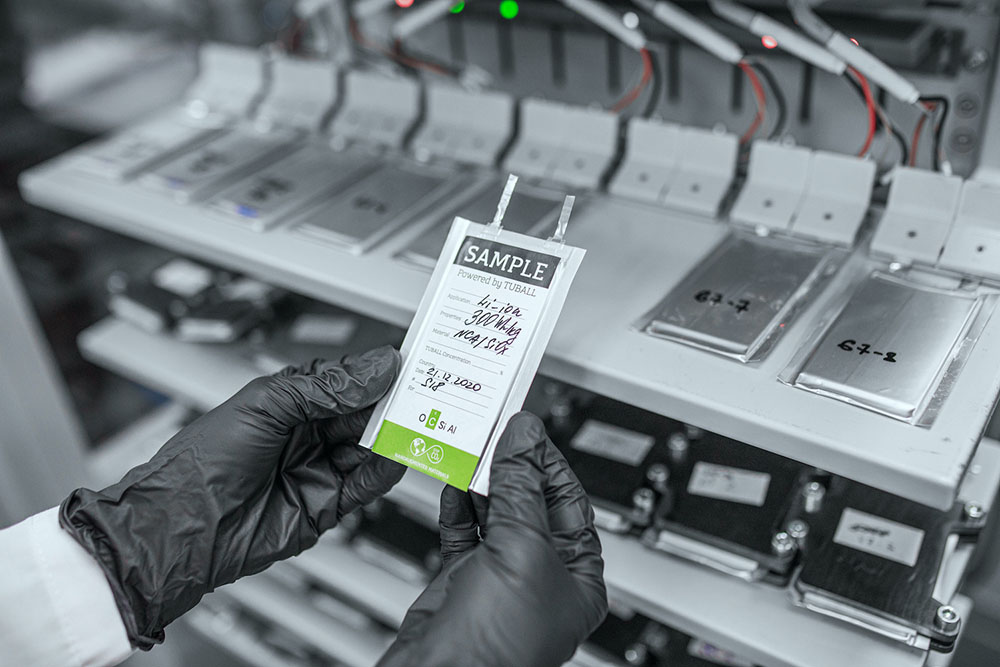
Graphene nanotube company OCSiAl has announced that two Chinese manufacturers of its graphene nanotube dispersion plan to raise production capacities for the dispersions. The graphene nanotube dispersion is designed for lithium-ion cells.

Chinese chemical manufacturers Shenyang East Chemical (East Chem) and Shanghai Haiyi Scientific Trading (Haiyi) started producing OCSiAl’s graphene nanotubes in 2019. According to OCSiAl, “The combined annual capacity of the two companies is planned to reach 40,000 tons in 2023-2024 to meet the increasing demand of the booming EV battery market.”

“The excellent electrical performance and flexibility of OCSiAl’s single wall carbon nanotubes allows for significant improvement of silicon-based anode cycle performance, and reduces the electrode resistance of cathodes and anodes, resulting in high energy density and fast-charging capabilities,” says General Manager of East Chem Dr. Yang Liu.

Source: OCSiAl


[ad_2]

Source link
Related Post

Charged EVs | How NanoGraf is commercializing the “world’s most energy-dense” 18650 battery cell with stable silicon dioxideCharged EVs | How NanoGraf is commercializing the “world’s most energy-dense” 18650 battery cell with stable silicon dioxide

[ad_1] Current EV battery anodes are composed mostly of graphite. Silicon can potentially store 10 times as much energy as graphite, but it’s less stable, so it isn’t (currently) feasible

Charged EVs | Benchmark Minerals: Battery production scrap will be the main source of recyclable material this decadeCharged EVs | Benchmark Minerals: Battery production scrap will be the main source of recyclable material this decade

[ad_1] As demand for lithium-ion batteries accelerates, recycling of raw materials will be an essential part of the circular EV ecosystem. However, in the near term, the primary source of